


AI has changed the way people https://dakshtihal.com/?page_id=748create content. Today, you can use AI tools to write blogs, generate images, create video scripts, design posters, write social media captions, and even suggest SEO keywords. For digital marketers, freelancers, students, and business owners, AI can save a lot of time.
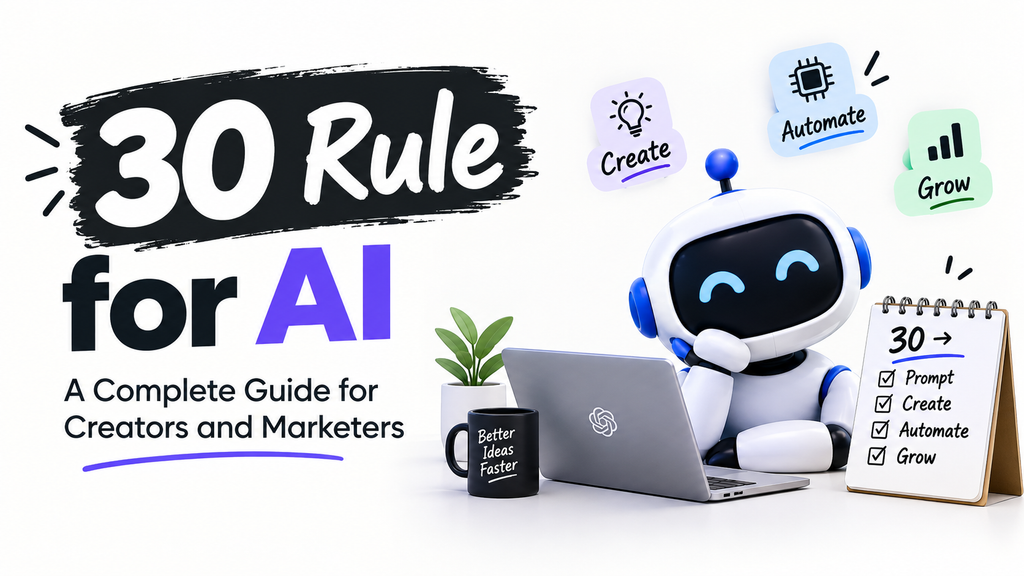
But there is one common problem: many people depend on AI too much. They copy and publish AI-generated content without editing it. As a result, the content sounds robotic, generic, and sometimes incorrect. That is why the 30 rule for AI is useful.
The 30 rule for AI means using AI for around 30% of your work, whilehttps://www.facebook.com/profile.php?id=61594957509072 humans handle the remaining 70%. In simple words, AI should support your creativity, not replace it.
This blog explains what the 30 rule for AI means, why it matters, how to use it, and how creators and marketers can apply it in daily work.
What Is the 30 Rule for AI?
The 30 rule for AI is a practical content-creation guideline. It suggests that AI should handle no more than about 30% of the total work, while the human creator should contribute the remaining 70%.
AI can help with repetitive and time-consuming tasks such as:
- Researching a topic
- Creating a content outline
- Writing a first draft
- Generating image or video ideas
- Suggesting headlines and captions
- Recommending hashtags
- Creating variations of the same content
- Formatting a blog or social media post
- Checking grammar and readability
However, humans should handle the most important parts:
- Selecting the topic and goal
- Understanding the target audience
- Adding personal experience and opinions
- Checking facts and statistics
- Maintaining brand voice
- Improving storytelling
- Making creative decisions
- Reviewing the final content before publishing
The exact percentage does not need to be perfect. The main idea is balance. AI can make your work faster, but your thinking, experience, and creativity make the content valuable.
Why Is the 30 Rule Important?
AI tools are powerful, but they are not perfect. They generate content based https://www.instagram.com/visioncraft_19/?hl=enon patterns and available information. Sometimes the output is impressive, but sometimes it is vague, repetitive, or factually wrong.
The 30 rule helps you avoid these problems.
1. It keeps content original
If everyone uses the same AI prompt and publishes the output directly, the content starts looking similar. Many blogs, captions, and ads begin to sound the same.
When you add your own examples, opinions, local knowledge, and brand personality, your content becomes different. This is especially important for freelancers and businesses that want to build a unique identity.
2. It improves quality
AI can create a draft quickly, but it may not understand your audience deeply. It may not know your customer’s problems, local market, tone, or brand values.
For example, AI can write a caption for a café, but you know whether your audience prefers a cozy, premium, funny, or youthful tone. You can improve the caption by adding real details, emotions, and a clear call to action.
3. It reduces mistakes
AI can sometimes produce incorrect facts, outdated information, or unrealistic claims. If you publish this content without checking, it can damage your credibility.
Before publishing, always verify:
- Statistics
- Dates
- Prices
- Product details
- Names
- Claims
- Legal or medical information
- Local business information
Human review is essential.
4. It protects your brand voice
Every brand has a personality. Some brands are professional, some are friendly, some are luxury-focused, and some are playful.
AI may write grammatically correct content, but it may not match your exact tone. By editing AI output, you make sure the content sounds like your brand—not like a machine.
5. It builds trust
People can often recognize generic AI content. It may be full of broad statements, repeated phrases, and no real insight.
When you add practical tips, real experiences, customer examples, and clear opinions, your content becomes more trustworthy. Trust is important for SEO, social media growth, and client conversions.
What AI Should Do: The 30% Part
AI is best used for tasks that take time but do not require deep human judgment.
Research and idea generation
You can ask AI to suggest blog topics, content angles, audience questions, keyword ideas, and competitor content themes.
For example, if you run a digital marketing page, you can ask AI:
“Give me 20 blog ideas about AI content creation for small businesses.”
AI can quickly give you a list. Then you choose the best ideas based on your audience and business goals.
Outlines and first drafts
Writing from a blank page can be difficult. AI can create an outline or first draft in seconds.
For a blog, AI can suggest:
- Introduction
- Main headings
- Subheadings
- Conclusion
- FAQ section
You can then rewrite the draft in your own style.
Social media captions and hashtags
AI is useful for creating caption variations, hashtag groups, and short-form video ideas.
For example, you can ask AI to create:
- Three Instagram captions for a fashion brand
- Five hooks for a reel
- Hashtags for a local business
- A caption for a product launch
Then you edit the best option and make it more personal.
Image and video concepts
If you create AI-generated advertisements, posters, or videos, AI can help you brainstorm visual concepts.
For example:
- “Create a cinematic ad concept for a luxury perfume.”
- “Give me poster ideas for a gym membership offer.”
- “Write a 15-second video script for a skincare product.”
AI gives you a starting point, https://x.com/DakshTihal58739but you decide the final creative direction.
SEO support
AI can help with:
- Finding related keywords
- Creating title tag options
- Writing meta descriptions
- Structuring headings
- Generating FAQ questions
- Improving readability
But you should still check keyword relevance, search intent, and competition manually.
What Humans Should Do: The 70% Part
The human part of the 30 rule is where your content becomes valuable.
Strategy
Before using AI, ask yourself:
- What is the goal of this content?
- Who is my audience?
- What problem am I solving?
- What action should the reader take?
- Which platform is this for?
- What tone should I use?
AI cannot fully understand your business goals. You need to provide direction.
Creativity and storytelling
AI can write words, but it cannot truly feel emotions or understand real-life experiences. Your stories, opinions, observations, and creative ideas make content memorable.
For example, instead of writing:
“Social media marketing helps businesses grow.”
You can write:
“When a local bakery started posting behind-the-scenes reels of fresh cakes being decorated, customer inquiries increased because people felt connected to the brand.”
The second version is more human, specific, and convincing.
Editing and refinement
Never publish raw AI content. Read it carefully and improve:
- Sentence flow
- Grammar
- Clarity
- Tone
- Repetition
- Structure
- Call to action
- Brand consistency
Even small edits can make AI content feel much more natural.
Fact-checking
Always verify important information. This is especially important for health, finance, legal, technical, and business-related content.
If AI gives you a statistic, find the original source. If it mentions a price, date, or product feature, confirm it from the official website.
Final approval
You are responsible for what you publish. AI can suggest, but you decide.
Before clicking publish, ask:
- Does this content help my audience?
- Does it match my brand?
- Is it accurate?
- Is it original enough?
- Would I be comfortable putting my name on it?
Example of the 30 Rule for AI
Let us say you are a digital marketing freelancer creating an Instagram post for a skincare brand.
AI does 30%
You ask AI to:
- Suggest five caption ideas
- Create a short reel hook
- Recommend hashtags
- Write a basic product-benefit description
AI gives you a draft like:
“Glow naturally with our skincare range. Hydrate, protect, and shine every day.”
You do 70%
You improve it by adding:
- The exact product benefit
- The target audience
- A real customer problem
- A stronger hook
- A clear call to action
- Brand-specific words
- Relevant local or seasonal context
Final caption example:
“Tired of dull, dry skin in winter? This lightweight moisturizer gives 24-hour hydration without feeling sticky. Perfect for daily use. DM ‘GLOW’ to order yours today.”
The AI gave you a starting point. Your editing turned it into a more persuasive and brand-specific caption.
How to Apply the 30 Rule Step by Step
Step 1: Define your goal
Do not start with AI immediately. First decide what you want to achieve.
Your goal may be:
- More website traffic
- More Instagram engagement
- More leads
- More product sales
- Better brand awareness
- Higher Google rankings
Step 2: Research your audience
Understand who you are creating for. Think about their age, location, problems, interests, and preferred content style.
AI can help you research, but your understanding of the audience should guide the final content.
Step 3: Use AI for research and drafts
Ask AI for ideas, outlines, keyword suggestions, and first drafts. This saves time and helps you overcome creative blocks.
Step 4: Add human value
Rewrite the draft using your own voice. Add examples, opinions, customer insights, local details, and practical advice.
Step 5: Fact-check and optimize
Check all facts. Then optimize the content for SEO or the specific platform.
For a blog, include your focus keyphrase naturally in:
- Title
- URL
- Introduction
- Headings
- Body content
- Meta description
For social media, improve hooks, captions, hashtags, and calls to action.
Step 6: Review before publishing
Read the content one final time. Make sure it is accurate, useful, original, and aligned with your brand.
Common Mistakes to Avoid
Publishing AI content without editing
This is the biggest mistake. AI output is a draft, not a finished product.
Using too many AI-generated words
Words like “unlock,” “revolutionize,” “game-changer,” and “in today’s fast-paced world” can make content sound artificial. Replace them with simple, natural language.
Ignoring search intent
If someone searches “what is the 30 rule for AI,” they want a clear explanation. Do not write only promotional content. Answer the question first.
Not adding examples
Examples make content easier to understand. Always include real-life or practical examples.
Forgetting your audience
AI may write for a general audience. You should adjust the content for your specific readers or customers.
Is the 30 Rule an Official Rule?
No. The 30 rule for AI is not an official law or a technical rule from AI companies. It is a practical framework used to encourage responsible AI use.
Some creators may use 20% AI, while others may use 40% for repetitive tasks. The exact number can change depending on the project.
The important principle is:
AI should increase your speed, not reduce your quality.
Who Should Use the 30 Rule?
The 30 rule is useful for:
- Digital marketers
- Content writers
- Social media managers
- Freelancers
- Business owners
- Students
- Bloggers
- Video creators
- Graphic designers
- SEO professionals
If you create content regularly, this rule can help you work faster without losing originality.
Final Thoughts
The 30 rule for AI is simple: use AI for about 30% of the work and keep humans responsible for the remaining 70%. AI can help with research, drafts, captions, SEO ideas, and creative concepts. But humans should provide strategy, creativity, editing, fact-checking, and final approval.
For digital marketers and content creators, this balance is powerful. AI helps you produce more content in less time, while your human input makes the content original, useful, and trustworthy.
Use AI as your assistant—not as the owner of your creativity. When you combine AI speed with human thinking, you can create better blogs, ads, social media posts, and brand campaigns.